Not ready to decide?
Lock it up, or get it out of the house for a while.
Storage keeps every option open.
General information, not legal advice.
Laws change and vary by state.
 Storage at Home
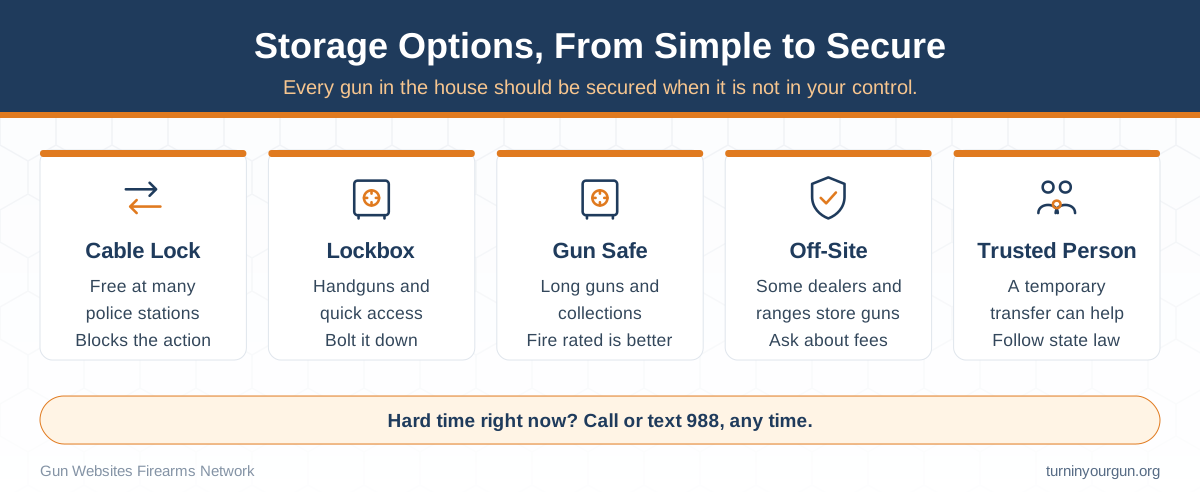
Every gun should be secured whenever it is not under your direct control. A cable lock blocks the action and is often free from police departments. A lockbox works for handguns. A gun safe protects long guns and collections from theft, children and fire. Store ammunition separately when children or visitors are in the home.
For help choosing a safe, see Gun Safe Buyers Guide.com, part of the Gun Websites Firearms Network.
 Talk to Kids About Guns
Children should know what to do if they ever find a gun: stop, do not touch it, leave the area and tell a grown-up. Teach it early and repeat it often, and remember that locked storage is what actually keeps them safe.
 Off-Site Storage
Some dealers, ranges and storage businesses will hold guns for a fee, which helps during a move, a deployment, a home sale or an estate. Ask what paperwork they need, whether a background check is required when you pick the guns up, and how they are insured.
 Temporary Transfer to Someone You Trust
Sometimes the safest move is to have a trusted friend or relative hold the guns for a while. Within the same state, federal law allows this, but many states require transfers, even short ones, to go through a dealer, and some states have specific exceptions for temporary transfers to prevent suicide or harm. Check your state rules before handing guns over, and make sure the person holding them can legally own guns.
 When Someone Is Struggling
Putting time and distance between a person in crisis and a gun saves lives. If you or someone close to you is thinking about suicide, getting the guns out of the house for a while is a strong, responsible step, and it can be undone later.
Call or text 988 for the Suicide and Crisis Lifeline, any time.
If anyone is in immediate danger, call 911.
 Watch: Storage Options