Federal law sets the floor.
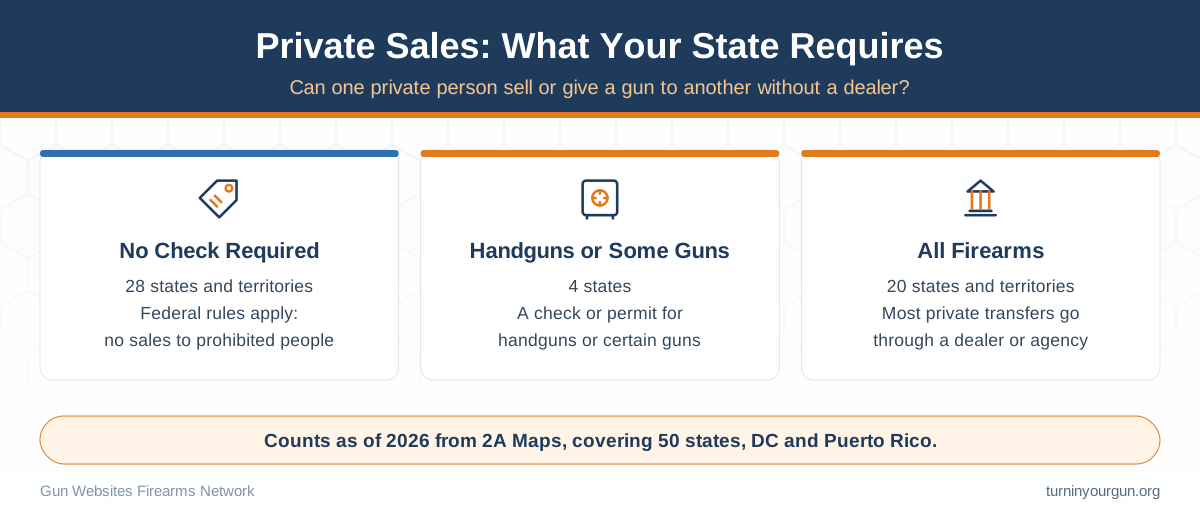
Your state decides how a private sale or transfer actually works.
Check these maps before you sell, give away or receive a gun.
General information, not legal advice.
Laws change and vary by state.
 The State Maps
Each map below opens on 2A Maps at Minuteman University.com, the network’s state law map project. Every map has a timeline slider, so you can see when your state’s rule started and how it has changed.
 Private Sale Background ChecksWhether a private sale must go through a dealer or a check, with a year slider back to 1965.
 Permit to PurchaseStates that require a permit or license before you can buy a gun at all.
 Permit to OwnStates that require a license just to possess a gun at home.
 Firearm RegistrationStates that register some or all guns with the state.
 Firearm Purchase AgeMinimum ages to buy handguns and long guns.Who Runs Background ChecksWhether checks go to the FBI or a state agency.
Family Transfers
Many states that require private sales to go through a dealer make an exception for transfers between close family members, such as spouses, parents, children, siblings and grandparents. The exact list of relatives, and whether the transfer must still be reported, varies by state. Check your state police or attorney general before handing a gun to a relative.
 Across State Lines
A sale or gift to a resident of another state goes through a dealer in the receiver’s state, no matter what either state allows for private sales. The main exception is a gun passed down through a will or inheritance. See Inherited and Estate Firearms.
 Where to Confirm
- Your state police or state attorney general website is the official source.
- A local licensed dealer knows how transfers work in your state and can walk you through it.
- For anything unusual, such as a restricted gun or an out-of-state heir, talk to a firearms attorney.
Back to Know Your Options.