Suppressors, short-barreled rifles and shotguns, and machine guns follow their own federal law.
That law changed in 2026.
Here is where things stand and what to watch.
Status as of October 9, 2026. This can change quickly.
General information, not legal advice. Talk to a firearms attorney before acting.
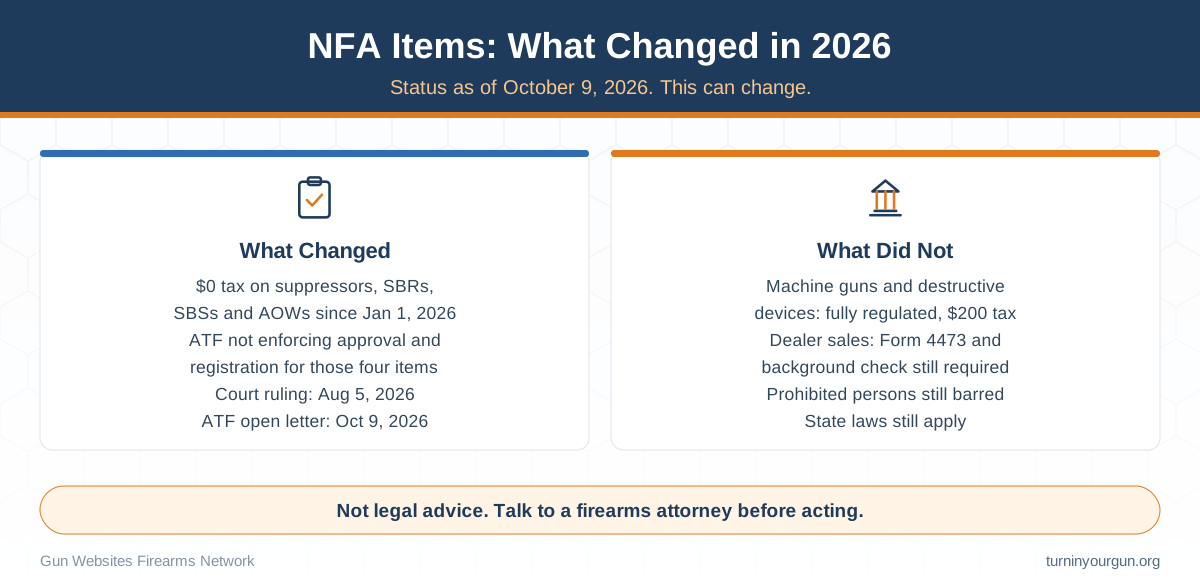
 What Changed
- January 1, 2026: the One Big Beautiful Bill Act cut the federal transfer and making tax to $0 for suppressors, short-barreled rifles (SBRs), short-barreled shotguns (SBSs) and “any other weapons” (AOWs).
- August 5, 2026: in Silencer Shop Foundation v. ATF, a federal court in the Northern District of Texas held that the NFA’s registration and transfer rules for those $0 items could no longer rest on the taxing power, and blocked enforcement for the plaintiffs and their customers.
- October 9, 2026: ATF announced in an open letter that it would stop enforcing approval and registration for those four categories nationwide, as a matter of enforcement discretion.
 What Did Not Change
- Machine guns and destructive devices are fully regulated. The $200 tax, ATF approval and registration all still apply.
- Buying from a dealer still requires Form 4473 and a background check.
- Prohibited persons still may not possess any firearm.
- State laws still apply. Some states ban NFA items, and some require federal registration as a condition of possession.
- For travel across state lines, owners of SBRs and SBSs should still file ATF Form 5320.20 before going. Suppressors are not covered by that requirement.
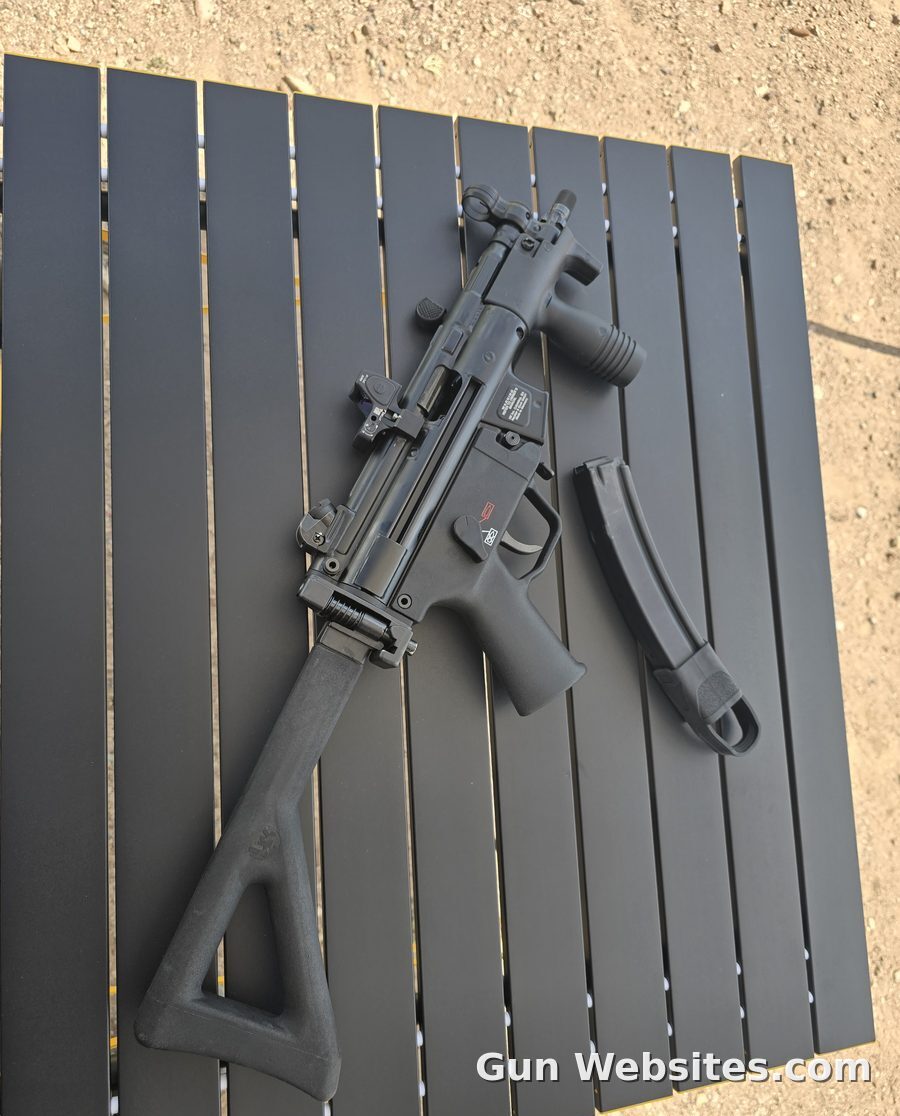
 Gun Trusts
Many owners hold NFA items in a gun trust. When the owner dies, the successor trustee named in the trust takes over management of items already registered to the trust, without a new transfer to the trust itself. Distributing an item out of the trust to a beneficiary is a separate step, so read the trust and talk to the attorney who drafted it.
 Inheriting an NFA Item
- Machine guns and destructive devices: the estate files ATF Form 5 to transfer the item to the heir, tax free. The heir does not take possession until ATF approves it.
- Suppressors, SBRs, SBSs and AOWs registered to an individual: ATF is not enforcing transfer approval right now, but the policy is discretionary and can be reversed. Many attorneys still recommend completing the paperwork so the record stays clean if enforcement resumes.
- Unregistered items: an item removed from the registry cannot be re-registered unless the Attorney General declares an amnesty period. Do not remove anything from the registry without legal advice.
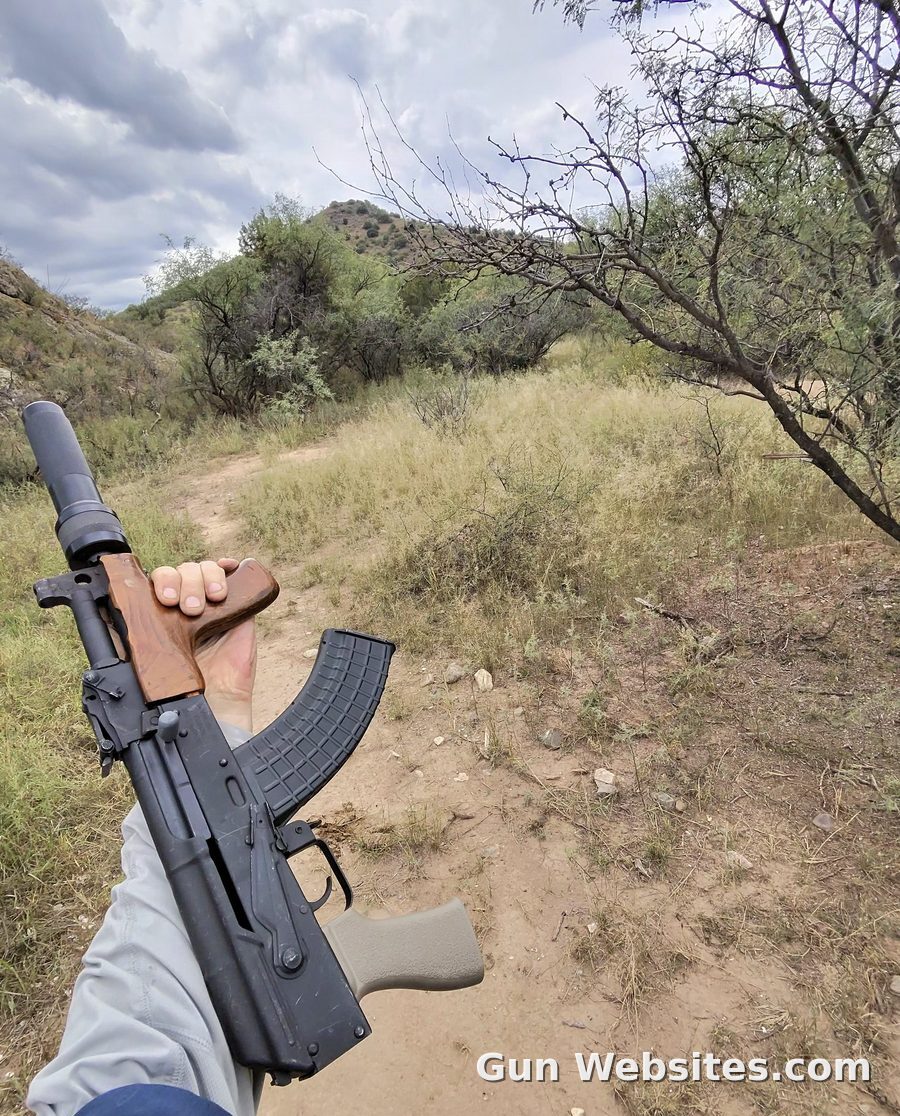
 Could There Be an Amnesty?
The 1968 amendments to the NFA created a 30-day amnesty that ended on December 1, 1968, and allowed future amnesty periods of up to 90 days each. None has been declared since. See the Amnesties and Buybacks Timeline for the full history.
 Watch: NFA Updates